Chlorine leaks in industrial systems aren’t just inconvenient—they’re hazardous, costly, and can trigger regulatory violations. For maintenance teams working in water treatment plants, chemical processing facilities, or industrial sanitation systems, fast and reliable leak repair is critical.
One proven solution for sealing threaded connections exposed to chlorine is LOX-8 thread sealant.
Why Chlorine Leaks Happen in Industrial Systems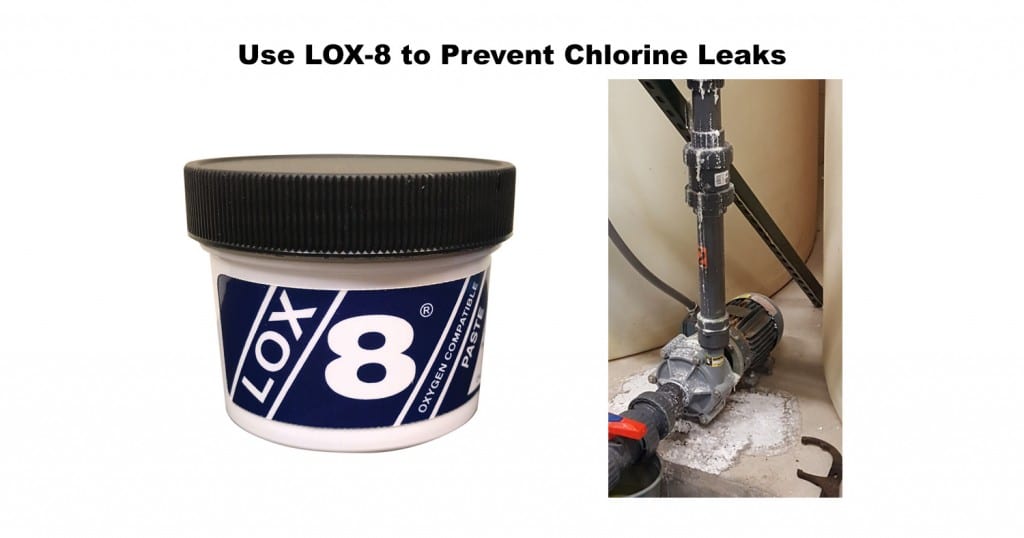
Chlorine is a highly reactive oxidizer that can degrade materials and compromise threaded joints over time. In industrial environments, leaks commonly occur due to:
- Thread corrosion from prolonged chemical exposure
- Improper installation or insufficient torque
- Use of incompatible or degraded sealants
- Thermal cycling causing expansion and contraction
- Vibration from pumps and mechanical systems
Even a small chlorine gas leak can escalate quickly, posing risks to personnel safety and equipment integrity.
Why Use LOX-8 Thread Sealant for Chlorine Systems
LOX-8 is specifically engineered for oxygen and chlorine service, making it superior to general-purpose pipe sealants in oxidizing environments.
Key Benefits for Industrial Maintenance
- Chlorine-compatible formulation for aggressive chemical resistance
- High-pressure sealing for critical systems
- Prevents galling and seizing during assembly
- Reliable sealing across temperature fluctuations
- Long-lasting performance, reducing repeat maintenance
Using a chlorine-rated thread sealant like LOX-8 helps ensure compliance with safety standards and reduces unplanned downtime.
Best Practices for Industrial Chlorine Systems
To minimize future leaks and maintenance issues:
- Use only chlorine-rated sealants and components
- Implement routine inspection schedules for threaded joints
- Replace aging or corroded fittings proactively
- Standardize installation procedures across maintenance teams
- Maintain proper torque specifications documentation
- Store sealants in controlled environments to prevent degradation
Common Mistakes to Avoid
Industrial teams often encounter repeat leaks due to preventable errors:
- Using PTFE tape not rated for chlorine service
- Applying sealant to dirty or wet threads
- Attempting to seal damaged or cracked fittings
- Over-tightening threaded connections
- Skipping pressure testing after repair
Avoiding these mistakes improves both safety and system uptime.
When to Replace Instead of Repair
LOX-8 is highly effective—but not a substitute for proper mechanical integrity. Replace components if you observe:
- Cracked or warped fittings
- Severe thread wear or stripping
- Deep corrosion or pitting
- Repeated leak failures at the same joint
In industrial chlorine systems, reliability always outweighs short-term fixes.
Final Thoughts
For industrial maintenance professionals, using LOX-8 thread sealant is a reliable and field-proven method for sealing chlorine leaks at threaded connections. When combined with proper safety protocols, correct application techniques, and routine system maintenance, it significantly reduces risk and downtime.
Chlorine systems demand precision and respect—using the right materials and procedures ensures your operation stays safe, compliant, and efficient.