Solvents are widely used because they dissolve materials like resins and plastics, and because they evaporate quickly and cleanly. However, because solvents evaporate, solvent-based rust inhibitors leave metal surfaces vulnerable to rust and corrosion in between frequent re-applications. Further, the higher the evaporation rate of a solvent, the more readily it can create an explosive or flammable air-vapor mixture. This means a solvent-based rust inhibitor may be toxic, flammable and corrosive to rusted surfaces where paint or a surface coating may exist. It is for these reasons that HinderRUST™ is formulated to be completely free of solvents
The Solvent Show Down
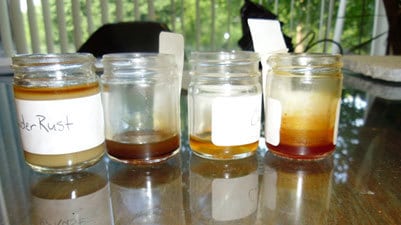
We realize that in order to truly understand the benefits of a non-solvent rust inhibitor, you need to see HinderRUST™ in action. Back at the lab, we conducted a test in which we lined HinderRUST up against three competitive products. We filled each of the jars below with our product and the others. Then we exposed them all to the same atmosphere for about a week. In the photo, you can see first-hand that the competitive products have evaporated. And not just a little, close to 75% or 80%. HinderRUST™ on the other hand, as seen on the far left, has no evaporation whatsoever. A rust inhibitor that doesn’t evaporate means a rust inhibitor that is doing the job right!
See Our Non-Solvent Rust Inhibitor in Action
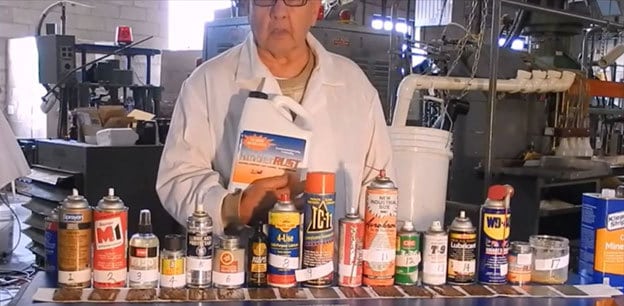
Check out our video showing the humidity chamber testing of HinderRUST™ against all the major rust inhibitor products in our industry and you will see the difference.
HinderRUST is a quality product, one that can truly get the job done. After its application, you can be confident that the product will not evaporate from the affected area. Competitive products will work well but only for so long — HinderRUST will never leave your machines and business vulnerable to rust and corrosion again.
To find out more about HinderRUST products contact us today.