Why LOX-8 Is a Trusted Thread Sealant for Hydrogen Applications
Hydrogen is playing an increasingly important role across industries—from clean energy and transportation to aerospace, manufacturing, and medical technologies. As hydrogen adoption grows, so does the need for sealing solutions that can perform reliably with one of the smallest and most difficult-to-contain molecules.
That’s where Fluoramics LOX-8 Thread Sealant stands apart as a hydrogen-ready thread sealant for demanding applications.
The Challenge of Sealing Hydrogen Systems
Hydrogen presents unique challenges for sealing systems because of its extremely small molecular size and the demanding conditions under which it is often stored, transported, and used.
Unlike a simple threaded connection carrying a relatively low-pressure liquid, hydrogen systems can experience high pressures, rapid pressure changes, temperature extremes, and repeated thermal cycling. Even small imperfections in a threaded joint can become potential pathways for gas migration.
For engineers, the challenge isn’t simply creating a seal. The seal must remain effective as operating conditions change.
High-Pressure Gaseous Hydrogen
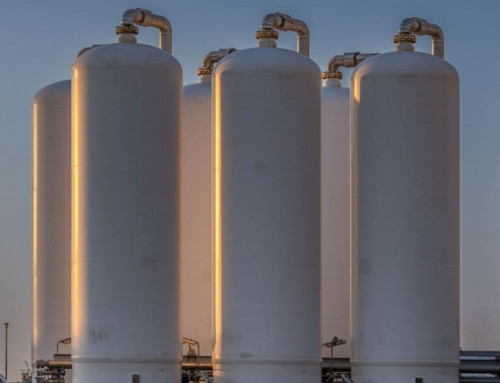
LOX-8 Thread Sealant provides a dependable seal in threaded connections of demanding hydrogen storage tank systems.
High-pressure gaseous hydrogen is particularly demanding from a sealing perspective. Hydrogen refueling systems, for example, can operate at pressures of approximately 700 bar, with some applications and equipment reaching or exceeding 1,000 bar.
At these pressures, hydrogen can permeate into sealing materials and microscopic spaces within a threaded connection. The seal therefore needs to do more than fill visible gaps—it must provide a dense, continuous barrier against gas migration.
Another concern is rapid gas decompression (RGD). When hydrogen is exposed to high pressure, gas can become absorbed or trapped within polymeric sealing materials. If system pressure is reduced rapidly, the dissolved gas can expand faster than it can escape, potentially causing blistering, cracking, or other damage to susceptible materials.
For this reason, hydrogen sealing systems often require materials and seal designs specifically selected for low permeability, pressure cycling, and resistance to decompression damage. Depending on the application, engineered elastomers, fluoropolymers, metal seals, and other specialized sealing technologies may be considered.
Liquid Hydrogen and Cryogenic Conditions
Liquid hydrogen presents a different set of sealing challenges.
Liquid hydrogen is maintained at approximately –253°C (20 K), creating an environment where ordinary sealing materials and conventional designs may not perform as expected. At these temperatures, materials contract, polymers can change mechanical properties, and differences in thermal expansion between components can alter the geometry and contact pressure of a seal.
LOX-8 remains stable up to +287°C (+550°F). It is also nonflammable and nontoxic, providing useful performance characteristics for demanding sealing environments. The service temperature of LOX-8 should be considered alongside the actual minimum and maximum temperatures, pressure, and thermal cycling requirements of the application.
Repeated transitions between ambient and cryogenic temperatures can make the problem even more challenging. A connection may need to remain leak-tight while components repeatedly expand and contract.
Cryogenic hydrogen applications therefore demand careful consideration of material compatibility, thermal contraction, seal geometry, and the effects of thermal cycling. Depending on the system, specialized cryogenic seals, metallic sealing elements, bellows, or engineered fluoropolymer components may be used.
Why Hydrogen-Ready Thread Sealants Matter
Not every hydrogen leak occurs through a damaged hose, valve, or major component. Threaded connections can also become leakage paths if the mating surfaces and sealing method are not properly selected.
Threads are manufactured with microscopic imperfections and clearances. A thread sealant helps fill those pathways and create a more continuous barrier between mating components.
For hydrogen service, this is especially important because the small size of hydrogen molecules makes even very small leakage paths significant.
A high-quality thread sealant can also provide benefits beyond leak prevention. It can help protect threaded components during assembly, reduce the risk of galling, and make connections easier to disassemble during maintenance. For engineers searching for pipe dope for hydrogen applications, selecting the right thread sealant means looking beyond basic leak prevention. Pressure, temperature, hydrogen compatibility, thread materials, and the specific operating conditions all need to be considered.
Where LOX-8 Fits Into Hydrogen Applications
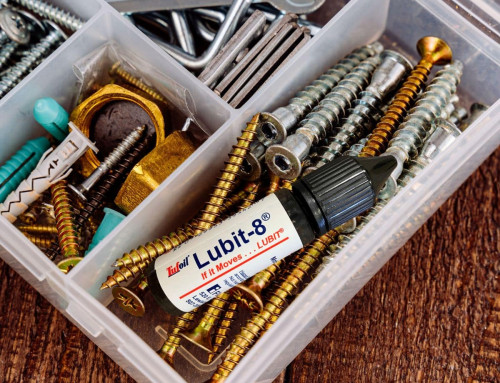
LOX-8 features a high-density formulation designed to help impede gas migration through threaded connections. This makes it a useful sealing solution for applications where threaded joints need reliable protection against leakage.
Its applications can include systems involving:
- High-pressure gas
- Hydrogen service
- Cryogenic applications
- Oxygen-compatible systems
- Aggressive chemical environments
As with any sealing product, the sealant should be evaluated against the specific pressure, temperature, thread material, gas composition, and operating conditions of the application.
Designed for Demanding Threaded Connections
Hydrogen systems frequently use stainless steel and other high-performance metal components. Thread galling can become a concern during assembly, particularly when similar metals are threaded together.
In addition to helping seal threaded connections, LOX-8 helps prevent galling and corrosion on stainless steel fittings. This can make installation easier while also supporting future maintenance and disassembly.
That combination is valuable in systems where components may need to be inspected, serviced, or replaced over their operating life.
Where LOX-8 Is Used with Hydrogen
Hydrogen is used in a growing number of industries, and reliable sealing is important wherever hydrogen-containing equipment relies on threaded connections.
Potential applications include:

LOX-8 Thread Sealant is suitable for use in facilities such as Petroleum refineries.
- Petroleum refineries, where hydrogen is used in processes such as hydrocracking and hydrotreating.
- Medical and industrial gas systems, where dependable leak prevention is critical.
- Welding and fabrication, where hydrogen may be used as a process or shielding gas.
- Hydrogen fuel cells, which generate electricity for vehicles, backup power, and stationary applications.
- Aerospace and spacecraft, where hydrogen can be used as a fuel and process gas.
- Hydrogen-powered transportation, including infrastructure associated with hydrogen fuel-cell vehicles.
- Backup power for data centers, where hydrogen fuel cells are being evaluated as alternatives to conventional backup-generation technologies.
Choosing the Right Seal for the Application
There is no single sealing material that is automatically appropriate for every hydrogen system. When selecting a hydrogen-ready sealing solution, engineers should consider more than basic chemical compatibility with hydrogen.
The correct sealing solution depends on the application. Engineers should consider factors such as:
- Operating and maximum pressure
- Operating and minimum temperature
- Whether the hydrogen is gaseous or liquid
- Pressure cycling and decompression rates
- Thread design and surface finish
- Material compatibility
- Chemical exposure
- Expected service life
- Applicable industry and safety standards
For extremely high-pressure gaseous hydrogen or cryogenic liquid hydrogen, the seal design and material selection should be validated for the actual service conditions rather than relying solely on general hydrogen compatibility.
This distinction is important because hydrogen compatibility and pressure/temperature capability are not necessarily the same thing. A sealant may be chemically compatible with hydrogen while still requiring additional evaluation for a particular combination of pressure, temperature, cycling, and joint design.
Supporting the Hydrogen Economy
As industries continue investing in hydrogen technologies, every component of the system matters—including the sealant used on critical threaded connections.
Hydrogen may be stored as a compressed gas, handled as a cryogenic liquid, or used in chemical and electrochemical processes. Each environment creates its own sealing challenges, from hydrogen permeation and rapid gas decompression to thermal contraction at cryogenic temperatures.
Selecting a thread sealant designed for demanding applications can help create more reliable connections and support long-term system performance.
Whether you’re working in refining, aerospace, clean energy, transportation, industrial gas, or other hydrogen-related applications, Fluoramics LOX-8 Thread Sealant is designed to help seal threaded connections in demanding environments.
LOX-8. Ask for it by name.
Shop Now>LOX-8