“It’s Leaking Again” — Those Dreaded Words
Whether you’re in the water treatment, chlorine, or bottled gases industry, few words cause the same dismay as those three. The natural inclination is to blame the sealant, but in many cases, the sealant is not to blame.
Fluoramics has done a fishbone analysis on the causes of leaks, and we will break down the elements in this eight-part series.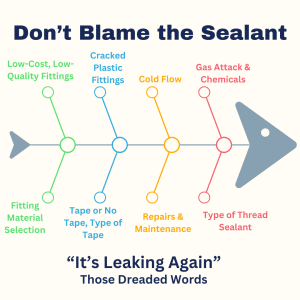
- Low-Cost, Low-Quality Fittings
- Fitting Material Selection
- Cracked Plastic Fittings
- Tape or No Tape, Type of Tape
- Cold Flow
- Repairs & Maintenance
- Gas Attack & Chemicals
- Type of Thread Sealant
Today we will be focusing on part three: Cracked Plastic Fittings
Most plastic piping units with threaded fittings provide a reliable, leak-free service. However, a small percentage of them may leak or break. One reason for this is the improper assembly of threaded joints.
Don’t Over Tighten Joints
On threaded male plastic fittings, each successive thread is slightly larger in diameter than the one before it. Female threads get successively smaller. This is called “taper,” and the amount of taper is specified in the American National Standard B2.1. All pipe manufacturers voluntarily follow these standards to ensure their customers receive quality materials. Because the threads are tapered, too many turns can cause the female part to stretch or undergo “strain.” This will split the female fitting.
The amount of strain increases as the size of the pipe decreases. So, it is easier to split smaller diameter threaded joints than larger ones. It’s also easier to over-torque smaller diameter fittings because their torque resistance is less. The right way to assemble a threaded plastic joint is to finger-tighten and add no more than 1/2 to 3/4 turn with a wrench.
Durability and Temperature Sensitivity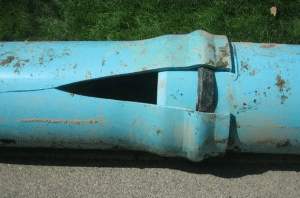
Plastic fittings are generally less strong than metal fittings, which makes them more susceptible to damage under heavy loads or high pressure. Over time, plastic degrades, especially when exposed to harsh environmental conditions, leading to leaks. For example, at very low temperatures, some plastics become brittle and crack. Similarly, in high-temperature environments, plastic can deform or melt. Repeated cycles of heating and cooling cause plastic fittings to expand and contract. This constant thermal stress will weaken the material and cause spider lines to form over time
Don’t Wrap Thread Seal Tape on Plastic Fittings
Thread seal tape is intended for metal pipes and fittings. Metal-to-metal fitting joints are more difficult to tighten than plastic; the surfaces tend to gall without the aid of a lubricant. When thread seal tape is wrapped around plastic male threads, it packs the threads, increases the pipe diameter, prevents the pipe threads from meshing properly, and adds strain and tensile stress.
Use The Right Kind of Sealant
When working with threaded plastic fittings, selecting the right sealant for the pipe and fluid is essential. Many brands of pipe sealant contain solvents or carriers that damage the plastic. A proper sealant must be certified by the manufacturer to be harmless to the fitting material and to not contaminate the fluid in the pipe.
A sealing compound must lubricate the joint well enough to allow for a smooth tightening (not too tight!) of the assembly and the uniform meshing of the mating pipe threads. Several sealants on the market meet these requirements, including Fluoramics’ LOX-8 Thread Sealant and Formula-8.
Use Fluoramics Sealants
Assuming you’ve found the source of your leaks, Fluoramics’ sealants are an excellent option to ensure no further leaking.
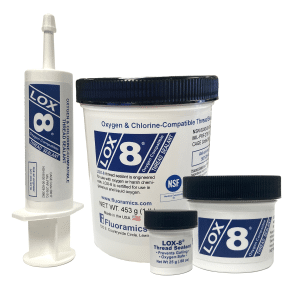
- LOX-8 Thread Sealant is highly recommended where oxygen or harsh chemicals such as chlorine or powerful oxidizers are present. It is the product of choice in applications where critical safety and resistance to aggressive chemicals are primary requirements. Providing superior performance as a sealant and anti-galling agent, LOX-8 withstands both high extreme temperatures and high pressure, plus is NSF-approved for food processing facilities.
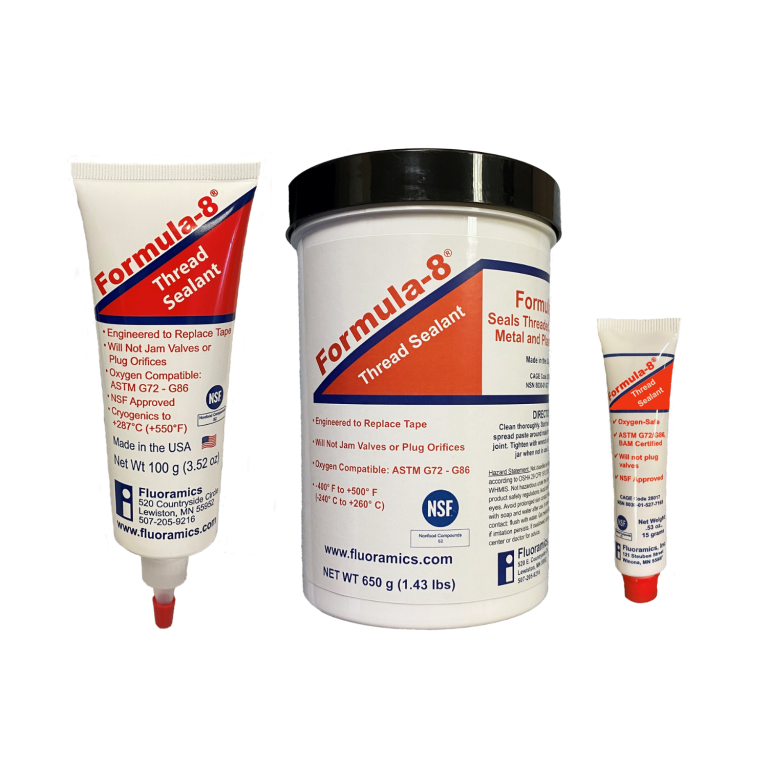
- Formula-8 seals threads in gas, liquid, and vacuum service. Oxygen-safe and NSF-approved for food processing facilities, Formula-8 is a water-based thread-sealing compound compatible with hydraulic oils and systems, PVC piping, cryogenics, and high temperatures. This sealant works by wetting into and sealing threaded joints when torqued and is engineered to seal over the entire thread length for the life of the joint in liquid, gas, and vacuum service.
If you haven’t found the source of your leaks, stay tuned for the next edition of Don’t Blame the Sealant where we will discuss Tape or No Tape, Type of Tape.
Shop LOX-8 Thread Sealant now> LOX-8 Thread Sealant
Shop Formula-8 Now> Formula-8